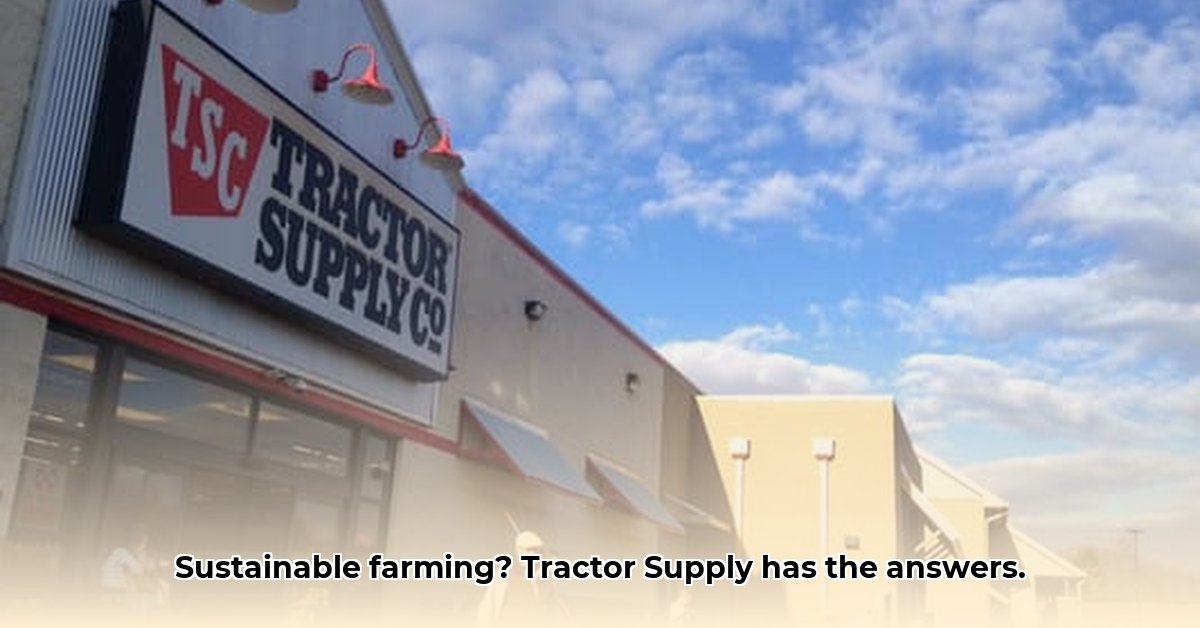
Tractor Supply in Brevard, North Carolina, offers a wide range of products essential for local farmers and gardeners. But how effectively does it support sustainable agriculture? This article examines Tractor Supply's role, highlighting areas of strength and weakness, and providing actionable steps for all stakeholders to promote a greener future in Brevard. For similar examples of sustainable practices, consider reviewing this nearby store's website.
Supporting Local Agriculture: Assessing the Current Landscape
Tractor Supply provides easy access to seeds, fertilizers, tools, and other farming essentials. Its convenient location benefits Brevard's agricultural community. However, the extent of its contribution to sustainable farming practices requires further investigation. While the store undeniably provides the means, the how and how much these resources contribute to sustainability remains unclear. We need more transparency regarding their sourcing and environmental initiatives to fully assess their impact. Do you know, for instance, what percentage of their products comes from sustainable or local sources? This lack of data hinders a complete evaluation.
Sustainability in Brevard: Opportunities and Challenges
Tractor Supply’s readily available resources are crucial for local agriculture. Yet, crucial information regarding their commitment to sustainable sourcing and environmental initiatives is lacking. This gap prevents a comprehensive assessment of their sustainability impact. This lack of transparency prompts several vital questions: What percentage of their products are sourced sustainably? What steps are they taking to reduce their carbon footprint? These are essential questions needing answers.
Actionable Steps for a Greener Future
Improving sustainability in Brevard requires a collaborative effort among Tractor Supply, local farmers, and the community. We present actionable strategies for short-term and long-term impact.
Actionable Steps for Tractor Supply Brevard, NC:
Short-Term Goals (Within 1 Year):
- Conduct a Comprehensive Environmental Audit: A thorough evaluation of supply chain, energy use, and waste management practices is crucial. This audit will provide a baseline for future improvements.
- Prioritize Locally-Sourced Products: Increase the availability and prominence of locally produced goods, reducing transportation impacts and supporting local producers. Aim for a 20% increase in locally sourced products within the next year.
- Develop Educational Resources: Host workshops or provide educational materials (pamphlets, online resources) on sustainable farming techniques. Empowering customers with knowledge is essential.
Long-Term Goals (3-5 Years):
- Implement a Comprehensive Sustainability Plan: Create a detailed plan with measurable goals for emissions reduction, waste reduction, and increased use of sustainable materials. Regular reporting on these key metrics is vital.
- Invest in Renewable Energy: Transition to renewable energy sources to power store operations. Aim to achieve a 50% reduction in reliance on fossil fuels within five years.
- Foster Community Partnerships: Collaborate with local farmers, environmental organizations, and government agencies to enhance sustainability efforts across the region.
Actionable Steps for Local Farmers and Gardeners:
Short-Term Goals (Within 1 Year):
- Utilize Sustainable Products: Make informed purchasing decisions, opting for sustainable products and practicing crop rotation whenever feasible.
- Demand Transparency: Communicate your preference for sustainable products and practices to Tractor Supply. Consumer demand drives positive change.
Long-Term Goals (3-5 Years):
- Collaborate with Tractor Supply: Engage with Tractor Supply to increase the availability of organic and sustainably sourced products.
- Knowledge Sharing: Network with fellow farmers to share and learn best practices for sustainable agriculture.
Actionable Steps for Local Government and Community Organizations:
Short-Term Goals (Within 1 Year):
- Support Local Agriculture: Implement policies to specifically support local sustainable farming initiatives.
- Incentivize Sustainable Businesses: Offer tax breaks or grants for businesses adopting eco-friendly practices.
Long-Term Goals (3-5 Years):
- Develop Comprehensive Sustainability Policies: Create local policies championing broad sustainable agricultural practices across the community.
- Promote Sustainable Businesses: Publicly recognize businesses (like Tractor Supply) actively advancing a greener Brevard.
Mitigating Risks: Challenges and Solutions
Sustainable agriculture faces several challenges. The following table outlines these risks and potential mitigation strategies.
| Risk Factor | Likelihood | Impact | Mitigation Strategy |
|---|---|---|---|
| Lack of product origin transparency | Medium-High | Medium | Demand more transparent labeling; encourage independent supply chain audits. |
| Limited sustainability initiatives | High | Medium-High | Develop a comprehensive Environmental, Social, and Governance (ESG) program with clear targets and reporting. |
| Reliance on fossil fuels | High | High | Transition to electric or alternative fuel equipment; invest in renewable energy sources. |
| Packaging waste | Medium | Low-Medium | Transition to recyclable and compostable packaging; encourage reduced packaging and reusable containers. |
Navigating the Regulatory Landscape
Compliance with all applicable local, state, and federal regulations is crucial for Tractor Supply and all stakeholders. Future legislation will likely place an increased emphasis on sustainability, demanding proactive adaptation and ongoing engagement with evolving regulations.
The path to sustainable agriculture in Brevard requires collaboration. By working together, we can foster a greener future.